
If you’ve noticed your baby’s head looking a little uneven, you might be wondering about cranial helmets. These custom-made devices are often recommended for infants with positional plagiocephaly, or flat head syndrome, a condition where the skull flattens due to prolonged pressure in one spot, like from sleeping on their back or spending time in car seats.
Do cranial helmets really work?
Cranial helmets are designed to guide head growth and correct head shape deformity gently. Worn 23 hours a day, they apply light pressure to reshape the skull while it’s still soft. Studies show mixed results: a 2014 trial suggested helmets might not outperform natural growth in moderate cases, with skull shape looking similar after two years. However, a 2015 study found a 94.4% success rate for full correction, especially when treatment starts between 4 and 6 months. The key? Timing and consistency—helmets work best when the child’s head is pliable and parents stick to the schedule. They can make a real difference for moderate to severe positional skull deformation.
Are cranial helmets worth the cost?
Whether it’s worth it depends on your situation. If repositioning techniques (like tummy time or adjusting how your baby sleeps) haven’t fixed a noticeable head shape deformity, a helmet might be justified. For mild cases, though, many babies improve naturally, making the cost less necessary.
Insurance coverage varies widely, so check your plan—some cover it as medical equipment, others don’t. If it’s about achieving a rounder skull shape for appearance, weigh that against the expense.
When are cranial helmets necessary?
Helmets are typically recommended for babies aged 4-12 months with moderate to severe positional plagiocephaly or brachycephaly (a wide, flat head shape). This often ties to the sleep campaign encouraging back-sleeping to reduce the risk of SIDS, which can flatten heads.
Helmets step in when:
- Repositioning techniques fail after a couple of months.
- The flattening or asymmetry is obvious and significant.
- Conditions like torticollis (tight neck muscles) worsen the head shape deformity.
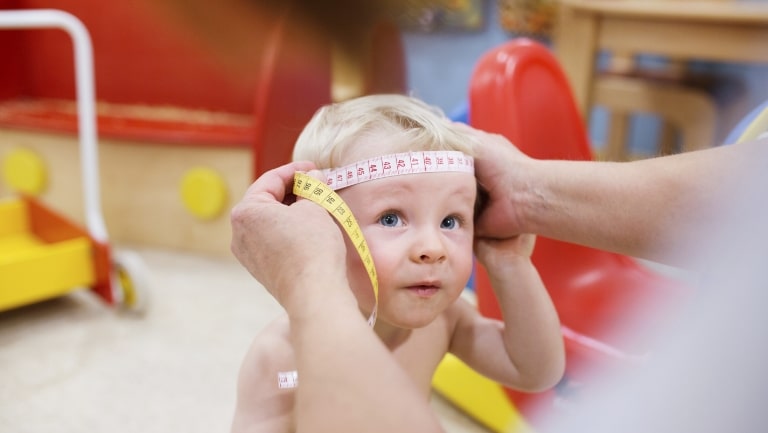
A pediatrician or orthotist can assess severity, sometimes using measurements like cranial vault asymmetry, to confirm whether helmet use is needed.
Can a baby’s head shape improve without a helmet?
Yes, often it can! Up to 77% of mild to moderate cases round out as babies grow and spend less time on their backs.
Simple changes help, like:
- More tummy time to build neck strength.
- Switching sleep positions in the crib.
- Cutting back on car seats or swings.
Physical therapy can also work wonders, especially for torticollis, sometimes matching helmet results. However, for severe positional skull deformation, natural improvement might not cut it, and helmets offer a stronger fix.
What are the benefits of cranial helmets?
When they work, helmets offer:
- Symmetry: They smooth out unevenness, improving how the child’s head looks.
- Potential Developmental Perks: Evidence is slim, but severe cases might see slight motor skill gains.
- Peace of Mind: A balanced skull shape can ease cosmetic worries for parents.
Starting early—around 4-6 months—maximizes these benefits while the skull is still flexible.
Are there risks or downsides to cranial helmets?
Helmets are safe but not perfect.
Watch for:
- Skin Irritation: Redness or sores can pop up from helmets for 23 hours, though a good fit minimizes this.
- Discomfort: Some babies wearing helmets fuss initially, but they usually adjust.
- Cost: Without insurance, it’s a big hit.
- Effort: Daily cleaning and ensuring the baby wears the helmet can feel taxing.
Rarely, a poor fit might reduce effectiveness, but regular check-ins with pros like Pongratz keep things on track.
How long do babies need to wear cranial helmets?
Expect 3-6 months, depending on age and severity. Babies wearing helmets 23 hours a day see the best results when started early—head growth slows after 12 months. They’re off only for bathing or cleaning, with adjustments as the baby grows. Severe cases or late starts might stretch to a year, but effectiveness drops after 14 months as the skull hardens.
Does insurance cover cranial helmets?
It’s a mixed bag. Some plans cover helmets for moderate to severe positional plagiocephaly with a doctor’s prescription.
Are cranial helmets just cosmetic, or do they help development?
Helmets are mostly cosmetic, fixing head shape deformity for a rounder look. Links to developmental delays or brain growth issues are weak, often tied to related conditions like torticollis rather than the head shape itself. Severe cases might slightly impact motor skills, but most babies do fine long-term without helmets. It’s usually a choice between appearance and practical considerations like cost and effort.
Next Steps for Plagiocephaly Care with Pongratz
Still unsure if your baby needs a cranial helmet?
We’re here to offer personalized guidance to support your child’s development.
Call us for a consultation to explore more.