
With so many options for prosthetic providers in the United States, it can be difficult to determine which one is the right fit for you! A quality prosthetic not only improves daily life but can also prevent dangerous health risks.
This blog highlights what to look for in a quality prosthetic provider, as well as some questions to ask during the decision stage.
Why Choosing the Right Prosthetic Provider Matters for Long-Term Outcomes
Choosing the right provider has a significant impact on the comfort and function of your prosthetic. Quality prosthetic support can ensure physical and emotional confidence as you adjust to your new prosthetic.
With a wide range of options, it’s important to consider a few key factors.
- Prosthetics fit: The quality of your prosthetic fit can impact mobility, posture, and joint health.
- Care and support: Improper prosthetic care can lead to pain, skin irritation and damage, and secondary injuries. The quality of your care team is just as important as the quality of your prosthetic.
- Continuity of care: The right provider won’t stop with device delivery. Consider options that offer treatment planning or physical therapy.
Board Certification and Clinical Credentials in Prosthetic Care
You will want to look for a prosthetic provider who is certified by the American Board for Certification in Orthotics, Prosthetics, and Pedorthics.
What Board Certification Means in Prosthetics
There is a difference between a licensed practitioner and a board-certified practitioner. A certification usually requires a Master’s degree in Orthotics & Prosthetics, as well as completion of a supervised residency.
In order to keep their certification, practitioners must continue their education and renew their certification every 5 years.
Having a certification is a national requirement, but some states require a specific license in addition.
Experience with Complex and Specialized Prosthetic Cases
For some, it’s necessary to find a provider with experience in complex prosthetic cases, as they require advanced technology.
Some of these specializations include:
- Upper-limb prosthetics
- Pediatric prosthetics
- Hip disarticulation prosthetics
- High-activity users
Patient-Centered Prosthetic Care, Not Just Device Fitting
When you’re looking for a new prosthetic provider, you want to feel confident that you’ll receive ongoing, patient-centered care. A quality provider offers more than just a prosthetic fitting.
Individualized Evaluation and Gait Analysis
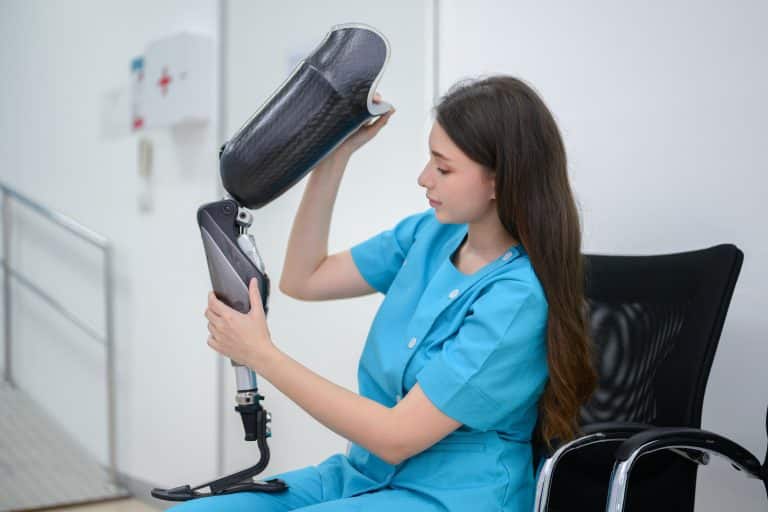
If your prosthetic has a poor fit, it can lead to pain, skin breakage, or fall risks. That is why you need to make sure your prosthetic provider conducts an accurate assessment.
A good provider will give an individual evaluation and gait analysis in order to ensure the proper prosthetic fit. As your needs change, additional assessments provide new solutions to improve function, so your prosthetic maintains optimal performance.
Education, Training, and Ongoing Support
After your new prosthetic is properly fit, you will need to know how to maintain its quality.
Find a provider who offers ongoing support, such as:
- Education: Make sure you are taught how to use, maintain, and troubleshoot your prosthetic.
- Physical therapy: Targeted exercises to ensure a healthy range of motion with your new prosthetic.
- Recurring assessments: Regular evaluations allow for adjustments as needs or goals change.
Advanced Prosthetic Technology and Custom Fabrication
Technology is always shifting, so you want a prosthetic provider who stays in front of new advancements and offers custom prosthetics with cutting-edge technology.
Use of Modern Prosthetic Materials and Components
Prosthetics have come a long way. New developments in technology allow for lightweight, yet sturdy materials such as carbon fiber and titanium.
Current prosthetic technology includes:
- Microprocessor knees: This advanced technology has sensors that adapt to your walking speed and adjust to fit new terrains.
- Dynamic response feet: This is an energy-storing prosthetic that can propel the user forward and is used for sports.
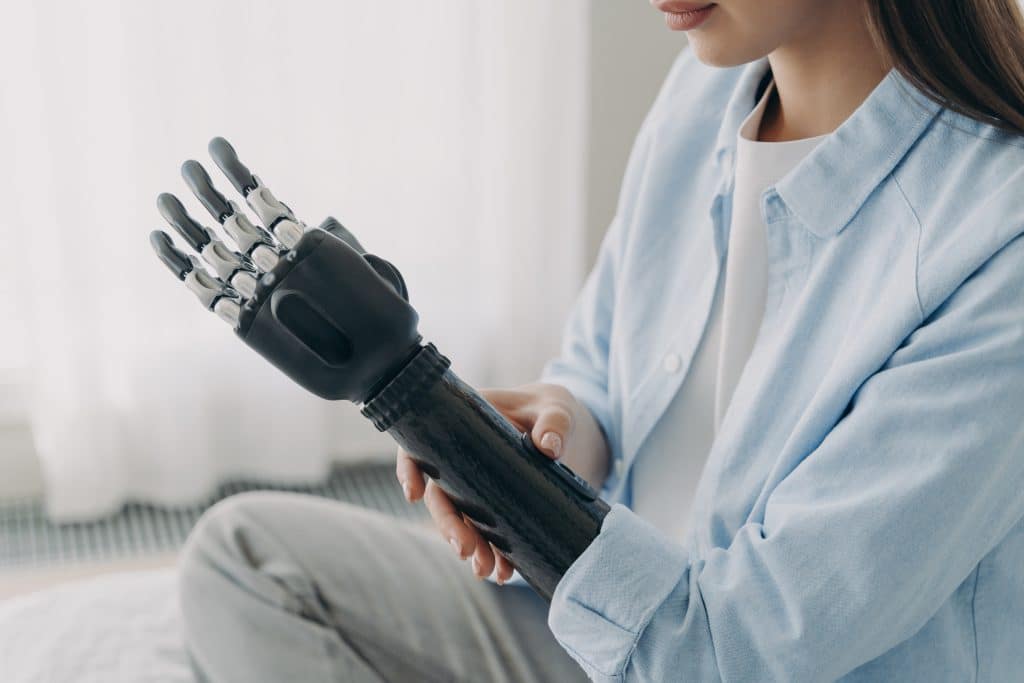
- Myoelectric arms: This high-tech prosthetic works through electrical impulses created by your muscles in order to mimic natural movement.
While these developments are exciting, components like these aren’t right for everyone. You will want to work with a provider who knows when to use high-tech solutions and when to suggest a different approach.
In-House Fabrication and Customization
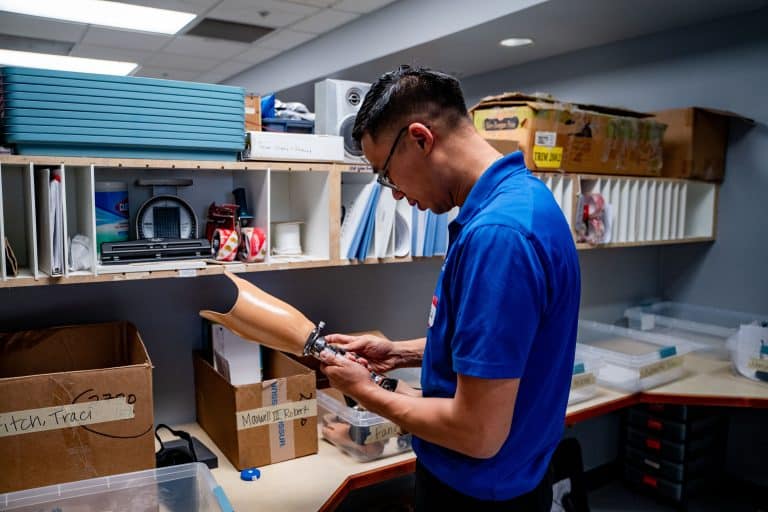
Providers who make custom prosthetics often have on-site labs, allowing faster turnaround and personalization. The control over quality allows these providers to use advanced technology and materials.
On-site customization benefits include:
- Precise fits
- Innovative solutions
- Fast delivery
- Quality control
- Personalized features
Follow-Up Care, Adjustments, and Long-Term Prosthetic Management
If this is your first prosthetic, you can expect frequent follow-ups and readjustments as your residual limb changes. This is why your prosthetic care should extend past delivery.
Regular follow-ups and refittings not only maintain function and comfort but also allow for early prevention of skin irritation or breakage. This is due to changes to the residual limb over time, which disrupt the quality of your prosthetic fit.
A high-quality prosthetic provider will offer long-term management and care, instead of simply delivering your device.
Insurance Knowledge, Transparency, and Advocacy
Not only do you want to look for advanced technology and educated professionals, but you also want to find a transparent provider that will help you navigate insurance and avoid unexpected expenses.
While seeking coverage for your prosthetic, your insurance company may try to deny coverage for various reasons. Your provider can help you dispute these claims by proving your prosthetic is medically necessary.
In addition to insurance advocacy, your provider must be transparent about costs and timelines. You don’t want to run into unexpected expenses later down the road, and having an upfront timeline can help you financially plan.
Reputation, Reviews, and Community Involvement
The best way to find out if you are choosing a quality prosthetic provider is by looking at their reviews and testimonials. Find out what past clients say and determine if there are any red flags.
What Patient Reviews and Testimonials Reveal
If patient reviews show consistent positive experiences, that’s a good sign. Look for testimonials that highlight responsiveness, compassion, and reliability. A few negative reviews are normal, but pay attention to recurring issues.
Community Engagement and Professional Involvement
In addition to reviews, providers will build trust among patients through community events and professional involvement in the medical space.
- Community engagement: Engagement with local amputee support groups fosters relationships and conversations that help shape the prosthetic practice.
- Professional involvement: Access to user-centered research allows for innovative solutions and devices.
Questions to Ask When Choosing a Prosthetic Provider
As you begin your search for a prosthetic provider, ask these key questions to ensure you are receiving the best care.
- Are your prosthetists board-certified?
- How much experience do you have with my type of amputation?
- Do you offer in-house fabrication and adjustments?
- What does long-term follow-up care look like?
- How do you help with insurance and approvals?
Custom-Fitted Prosthetics at Pongratz
At Pongratz, we offer custom prosthetics with the latest technology. With over 25 years of experience, we understand the pain points of prosthetics and offer personalized solutions to improve your daily life.
If you are looking for your next prosthetic provider, call us today! With many facilities across the valley, we’re always within reach.