
What Are AI-Powered Prosthetics and Smart Orthotics?
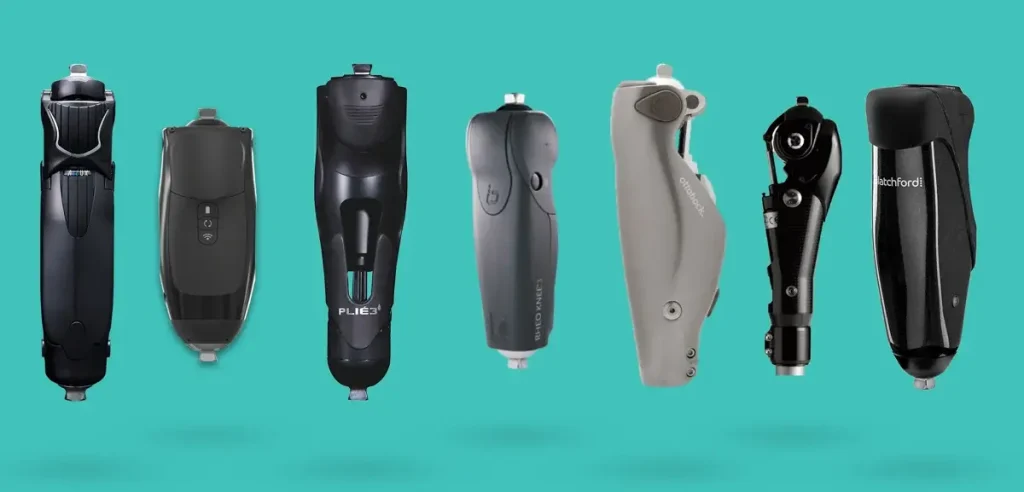
Photo credit: SPS Co.
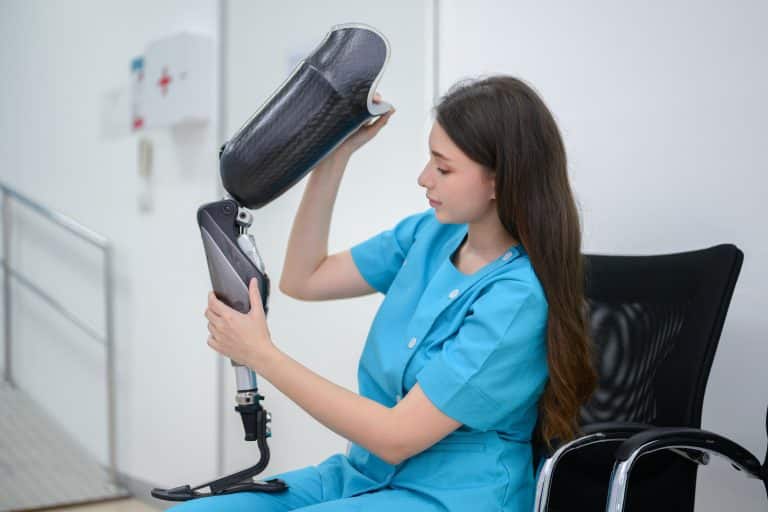
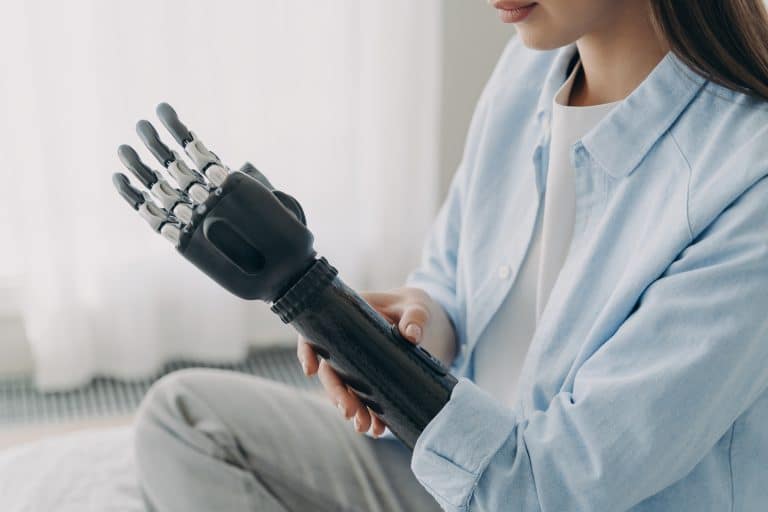
AI-powered prosthetics and smart orthotics are advanced devices that use sensors, computerized components, or learning-based systems to support more responsive movement. In prosthetics, this may include a microprocessor-controlled knee that adjusts resistance while walking, a smart prosthetic foot that adapts to terrain, or a myoelectric hand that interprets muscle signals from the residual limb. [1] [2] [3]
In simple terms, smart prosthetic and orthotic devices are designed to collect information from the user, the device, or the environment, then adjust how the device responds in real time.
This matters because mobility is not one single action. A patient may need to walk across tile, grass, ramps, stairs, or uneven sidewalks, all on the same day. Someone using an upper-limb prosthesis may need one grip pattern for a cup, another for a phone, and another for a handshake. Smart technologies are designed to make those transitions feel more intuitive, although the right device still depends on the patient’s limb difference, strength, residual limb condition, activity level, goals, and insurance requirements.
TL;DR: What Patients Should Know
AI-powered prosthetics and smart orthotic devices use sensors, microprocessors, machine learning, or myoelectric control systems to help a device respond more naturally to the person using it. These technologies may help with smoother gait, improved balance confidence, better hand control, or more personalized movement support, depending on the device and the patient’s goals. [1] [2] [3]
Not every patient is a candidate for these newer technologies. Many smart prosthetic and orthotic devices require a clinical evaluation, a product trial, documentation of medical need, and insurance authorization before they can be provided. If you are curious whether this technology may be appropriate for you, request a free appointment with Pongratz Orthotics & Prosthetics to discuss your goals, lifestyle, and coverage options.
How Does Predictive Motion Technology Work?
Predictive motion technology works by using sensor data to estimate what the user is trying to do next, then adjusting the device to support that movement. In lower-limb prosthetics, this can involve sensors that detect walking speed, knee angle, load, or changes in terrain. In upper-limb prosthetics, myoelectric systems may detect electrical activity from muscles and translate those signals into hand, wrist, or finger movement. [2] [3]
| Technology Type | How It Usually Works | Potential Patient Benefit |
| Microprocessor prosthetic knees | Sensors and an internal computer monitor movement and adjust knee resistance in real time. | May support stability, smoother walking, confidence, and safer transitions across daily environments. [1] [2] |
| Smart prosthetic feet and ankles | Device components may adjust position, stiffness, or response based on walking pattern and terrain. | May help create a more natural gait and reduce the effort required to walk in changing environments. [4] |
| Myoelectric prosthetic hands | Sensors detect muscle signals from the residual limb and convert them into prosthetic hand movement. | May support more intuitive upper-limb control for daily tasks such as grasping, holding, or releasing objects. [3] |
| Smart orthotic systems | Sensors, dynamic materials, or electronically assisted components may support alignment, movement, or neuromuscular function. | May help selected patients who need advanced bracing, motion assistance, or customized support. |
For example, a microprocessor knee is different from a purely mechanical knee because it uses a small onboard computer and sensors to make continuous adjustments. A systematic review published in the European Journal of Physical and Rehabilitation Medicine explains that these knees monitor movement through sensors and adjust hydraulic resistance in real time, including responding to patterns that may resemble a fall. [2]
Why Are These Devices Getting Attention Now?
These devices are getting attention because prosthetic and orthotic technology is moving from passive support toward more adaptive, patient-specific responses. Research on microprocessor knees has found better functional status and quality-of-life outcomes compared with non-microprocessor knees in lower-limb amputation populations, while recent clinical research continues to evaluate how these devices perform during early rehabilitation. [1] [2]
A 2025 pilot randomized controlled trial reported that people using microprocessor-controlled prosthetic knees had higher mobility, balance confidence, and return-to-normal-living scores after three months compared with participants using non-microprocessor knees, although the authors emphasized that the trial was small and future studies are needed. [1]
For upper-limb users, the attention is focused on control. Myoelectric prosthetic hands are designed to use muscle signals to identify user intention and control hand movement, and researchers continue to refine how these systems interpret signals, improve dexterity, and reduce the mental effort of using a device. [3]
InformationWeek also notes that AI-powered prosthetics can learn and adapt through machine learning, potentially anticipating user movement and adjusting accordingly. [4]
That promise is exciting, but it should be understood carefully: not every advanced prosthetic is fully “AI-powered,” and not every AI concept is available in routine clinical care. A prosthetist’s role is to help patients separate what is commercially available, what is clinically appropriate, and what is still emerging.
Which Patients May Benefit From Smart Prosthetic or Orthotic Technology?
Patients may benefit from smart technology when their daily mobility needs, activity level, functional goals, and medical presentation match the capabilities of the device. A person using a lower limb prosthesis may be interested in smoother walking, improved confidence on uneven terrain, or better support during stance and swing phases. A person exploring upper extremity prosthesis options may be looking for more intuitive grip control, hand positioning, or task-specific function.
However, advanced technology is not automatically the best choice for every patient. Comfort, socket fit, training, maintenance, patient commitment, and follow-up care all affect outcomes. Pongratz’s existing blog on why follow-up care matters in prosthetics and orthotics is especially relevant because smart devices still require proper fitting, adjustment, education, and long-term support.
| Patient Goal | Device Category to Discuss | Helpful Pongratz Resource |
| Improve walking confidence or adapt to varied terrain | Microprocessor knee, smart foot, or advanced lower-limb prosthetic component | Lower Limb Prosthesis |
| Improve hand opening, closing, or grip patterns | Myoelectric or bionic upper-limb prosthesis | Upper Extremity Prosthesis |
| Explore newer device options after frustration with current care | Second opinion or technology consultation | Get a Second Opinion |
| Understand costs, documentation, and coverage | Insurance review and authorization guidance | Accepted Insurance |
| Determine whether a product trial is appropriate | Clinical evaluation and possible trial pathway | Request an Appointment |
For patients who are just beginning their research, Pongratz’s educational posts on what prosthetic devices are, how prosthetic hands work, and how prosthetic arms work can provide a helpful background before comparing advanced options.
What Should Patients Know About Trials and Insurance Authorization?
Patients should know that many newer AI-powered and smart devices require a trial and insurance authorization before they can be provided. This is because advanced prosthetic and orthotic components often need documentation showing that the device is medically necessary, functionally appropriate, and aligned with the patient’s mobility level and goals.
Insurance requirements vary, but the process may include a clinical evaluation, physician documentation, functional assessment, trial data, device justification, and prior authorization. Pongratz’s patient resource on accepted insurance is a useful place to begin, and their blog on how insurance typically covers prosthetics and orthotics can help patients understand the broader coverage process.
The trial step is important because a device that sounds impressive on paper still needs to work for a specific person in real life. A trial can help the patient and clinical team evaluate comfort, control, confidence, training needs, and whether the technology supports meaningful daily function.
What Questions Should You Ask Before Choosing a Smart Device?
Patients should ask whether the technology fits their body, lifestyle, goals, and coverage requirements. The most useful appointment is not simply a discussion of the newest device; it is a discussion of what the patient wants to do and what technology can realistically support.
| Question to Ask | Why It Matters |
| Am I a clinical candidate for this technology? | Advanced components may require a certain limb presentation, strength level, activity level, or training capacity. |
| Can I trial the device before committing? | A trial can show whether the technology improves real-world function for the individual patient. |
| Will insurance require prior authorization? | Many smart devices require documentation, justification, and payer approval. |
| How much training will I need? | Myoelectric, microprocessor, and adaptive devices may require practice and follow-up adjustments. |
| What happens if my needs change? | Fit, components, and settings may need to be reviewed as the patient’s activity level, limb volume, or goals change. |
If you are preparing for a visit, Pongratz’s post on what questions to ask your prosthetist can help you organize your priorities before the appointment.
The Future Is Promising, But Clinical Fit Still Comes First
AI and smart-device research is moving quickly, with work underway in neural interfaces, sensory feedback, terrain recognition, and personalized device learning. [3]
These innovations point toward prosthetic and orthotic care that may become more responsive, intuitive, and individualized over time.
Still, the best device is not always the newest device. The best device is the one that fits well, supports the patient’s goals, can be used consistently, and is backed by appropriate clinical care. That is why a patient-centered evaluation remains essential, especially when considering advanced technology that may require a trial and insurance authorization.
Pongratz Orthotics & Prosthetics has served Arizona patients since 1997 and provides prosthetic and orthotic care across multiple locations, including Phoenix, Scottsdale, Glendale, Chandler, Gilbert/Mesa, Avondale, Casa Grande, and Tucson. If you are exploring whether smart prosthetic or orthotic technology may help you return to the activities and lifestyle you love, Pongratz can help you understand your options.
Ready to Find Out If You Are a Candidate?
Newer AI-powered and smart prosthetic and orthotic devices often require a trial and insurance authorization. The best next step is to meet with a clinician who can review your goals, current device, mobility needs, and coverage pathway.
Request a free appointment with Pongratz Orthotics & Prosthetics to discuss whether you may be a good candidate for this new technology. If you are unhappy with your current prosthesis or clinical care, you can also explore a prosthetic second opinion.
Frequently Asked Questions
What is an AI-powered prosthetic?
An AI-powered prosthetic is a prosthetic device that uses artificial intelligence, machine learning, or advanced data processing to help interpret user intent, movement patterns, or environmental conditions. In practical terms, this may include a device that learns from repeated movements, adapts to terrain, or helps create more responsive control. [4]
Are all microprocessor prosthetic knees AI-powered?
No. A microprocessor knee is a smart prosthetic component because it uses sensors and an internal computer to adjust knee behavior in real time, but that does not always mean it uses artificial intelligence in the way the term is used in machine learning. Many patients use “smart,” “microprocessor,” and “AI-powered” interchangeably, but a prosthetist can explain the difference for each device.
Can smart prosthetics help prevent falls?
Some microprocessor knees are designed to improve stability and respond to movement patterns that may indicate a fall risk. Research has found that microprocessor knees can improve mobility and quality-of-life outcomes compared with non-microprocessor knees, and some studies report better balance confidence among users. [1] [2]
However, fall risk depends on many factors, including health status, environment, training, fit, and follow-up care.
Do AI-powered prosthetics require more training?
Many advanced prosthetic devices require training because the patient must learn how to use the system effectively. Myoelectric hands, for example, rely on muscle-signal control, and users often need practice to generate consistent signals and perform functional tasks. [3]
Will insurance cover smart prosthetics or orthotics?
Coverage depends on the patient’s insurance plan, diagnosis, functional needs, documentation, and medical necessity. Many advanced devices require prior authorization, and some may require a trial before final approval. Patients can begin by reviewing Pongratz’s Accepted Insurance page and scheduling an appointment to discuss the authorization process.
How do I know if I am a candidate for this technology?
The only way to know is through a clinical evaluation. A prosthetist or orthotist will consider your goals, limb presentation, strength, activity level, current device, medical history, and insurance requirements. You can request an appointment with Pongratz to discuss whether a trial or advanced technology evaluation makes sense for you.
References
[4] Edwards J. How AI is Revolutionizing Prosthetics to Refine Movement. InformationWeek. 2024.