
It’s a fascinating process that blends medical know-how, engineering, and advanced technology to create devices that restore independence and improve quality of life. At Pongratz Orthotics and Prosthetics, we’ve been crafting custom prosthetic limbs for adults and children across Arizona for years.
How do they make prosthetic arms?
Creating a prosthetic arm is a personalized, step-by-step process designed to meet your unique needs.
Here’s how it works:
Assessment and Measurement
It all starts with a visit to a specialist, like an occupational therapist or physical therapist, who evaluates your residual limb (the remaining part of your arm). Using advanced tools like 3D scanning, they take precise measurements to ensure your prosthetic device fits perfectly. This step is crucial for comfort and functionality.
Designing the Prosthetic
Next, your orthotist designs the arm based on your lifestyle and goals.
There are different types of prosthetics to choose from:
- Myoelectric prostheses: Controlled by muscle signals for natural movement.
- Body-powered prosthetics: Operated with cables and body movements.
- Passive prosthetics: Non-moving, mainly for appearance.
Building the Socket
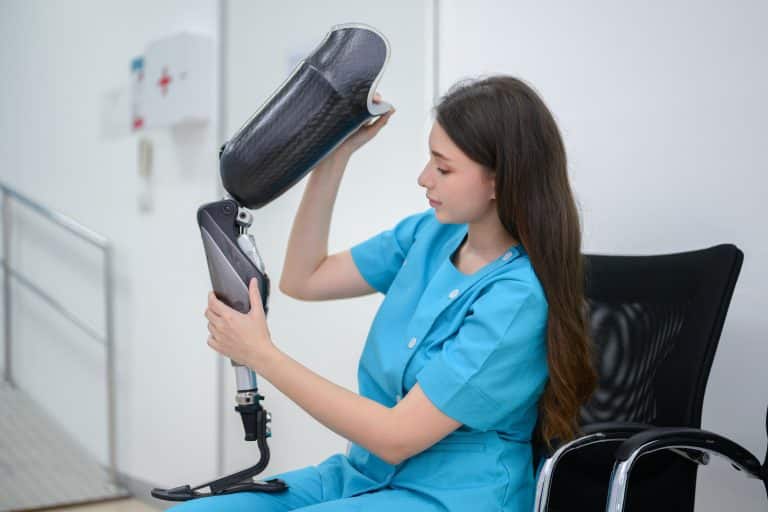
The socket connects the prosthetic arm to your residual limb. It’s custom-made using lightweight, durable materials like carbon fiber or silicone to ensure a snug, comfortable fit.
Adding the Terminal Device
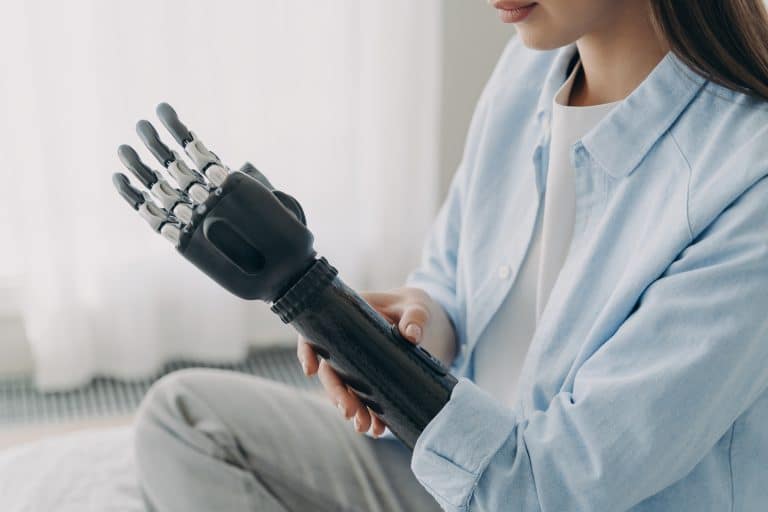
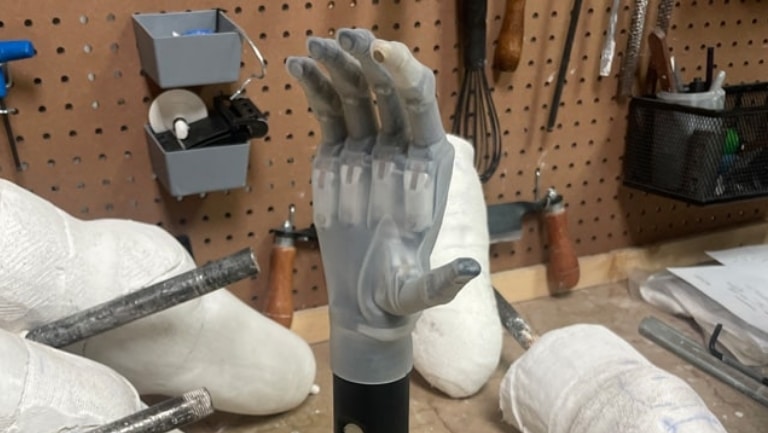
The terminal device is the working end of the prosthetic—think prosthetic hand, hook, or specialized tool. For example, a myoelectric prosthesis might feature a multi-articulating hand for gripping, while a simpler functional prosthetic might use a hook for basic tasks.
Testing and Adjustments
Once assembled, you’ll test the arm with an occupational therapist. They’ll fine-tune the fit and teach you how to use it, like opening and closing the hand wrist if it’s a myoelectric prosthetic. This ensures it works seamlessly for you.
Are prosthetic arms electric?
Not all prosthetic arms are electric—it depends on the design.
Here’s a breakdown:
- Myoelectric Prosthetics: Yes, these are electric! They use battery-powered motors controlled by electrical signals from your muscles. A bionic arm, for instance, can open and close its fingers with a muscle flex, offering precise control.
- Body-Powered Prosthetics: These aren’t electric. They use cables and harnesses you move with your body—like shrugging your shoulder to operate the terminal device.
- Passive Prosthetics: Also non-electric, these focus on appearance rather than movement.
How long does it take to make a prosthetic arm?
The timeline depends on complexity and customization, but here’s what to expect:
- Type of Prosthetic: A basic functional prosthetic might take a few weeks, while a high-tech myoelectric prosthesis could take months.
- Custom Fit: Every residual limb is different, so crafting the perfect socket takes time. 3D scanning speeds things up, but adjustments are still needed.
- Training: After it’s built, occupational therapy helps you master it, adding a few weeks to months, depending on your progress.
Typically, it takes 2 to 6 months from consultation to wearing your new arm. Our team at Pongratz guides you every step of the way.
How heavy is a prosthetic arm?
Weight matters—you want your prosthetic limb to feel natural, not burdensome.
Here’s the scoop:
- Lightweight Materials: Modern arms use materials like carbon fiber, keeping them between 1 to 3 pounds, depending on the design.
- Myoelectric Prosthetics: Slightly heavier due to batteries and motors, but technology keeps improving to lighten the load.
- Comfort: A well-fitted prosthetic device shouldn’t feel heavy. Our experts ensure it’s tailored for ease and comfort.
Trusted Orthotists at Pongratz
Our comprehensive and professional services will ensure your orthotics and prosthetic limbs are always in optimal condition.
If you or your loved one requires a professional orthotist, consider consulting with Pongratz. We promise that our care utilizes the latest advancements in orthotic and prosthetic technology. We will ensure your needs are met and that you are on the path to healthy foot, ankle, and back development.
Our team of specialists in Avondale, Chandler, Gilbert/Mesa, Phoenix, Glendale, Scottsdale, and Tucson would love to help you.