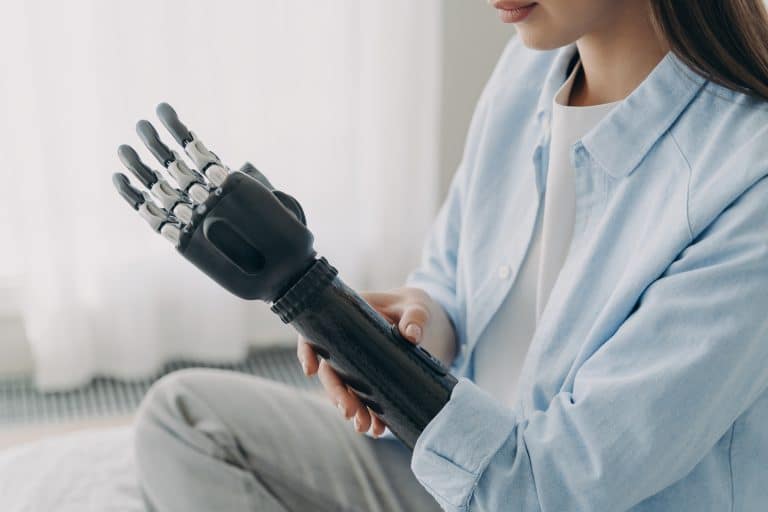


Prosthetic hands are artificial limbs designed to restore function and improve the quality of life for individuals with upper limb amputations. Whether you’re an adult exploring options for prosthetic limbs or a parent seeking solutions for your child, understanding how these devices operate can empower you to make informed choices.
How do prosthetic hands grab?
Prosthetic hands grab objects using specialized mechanisms tailored to the type of prosthesis:
- Body-powered prostheses: These rely on cables and harnesses linked to body movements. For instance, shrugging your shoulder can make the hand open and close.
- Myoelectric prosthetic hands: These use muscle signals detected from the residual limb. Sensors interpret muscle contractions to trigger actions like grasping or releasing.
- Bionic hands: Advanced models feature microprocessors that process muscle signals, enabling precise control over individual fingers.
These technologies allow users to handle everyday tasks, such as holding a spoon or picking up keys, enhancing their daily living activities.
How do people control prosthetic hands?
Controlling a prosthetic hand depends on its control system:
- Body-powered systems: Users operate the hand by moving other body parts, like the shoulder or chest.
- Myoelectric systems: These detect electrical signals from muscle contractions in the residual limb, converting them into hand movements.
- Brain-computer interfaces (BCIs): Still experimental, these aim to allow thought-based control, representing the future of biomedical engineering.
With practice, users can achieve intuitive control, adapting the prosthetic to their needs.
Can you control a prosthetic hand?
Yes, you can control a prosthetic hand.
The extent of control varies by design:
- Basic hand prostheses may only open and close as a single unit.
- Bionic hands offer advanced functionality, including individual finger movements and, in some cases, sensory feedback to “feel” objects.
Training enhances mastery, enabling users to perform complex tasks with confidence.
Does a prosthetic hand look just like the hand it replaces?
Modern prosthetic hands can be customized to closely resemble a natural hand, matching skin tone and shape. While advancements in high-tech design make them look realistic, they may not be identical due to functional components. Some users opt for a futuristic robotic hand aesthetic instead.
How do prosthetic hands stay on?
Prosthetic hands stay secure through various attachment methods:
- Suction sockets: These form a tight seal with the residual limb.
- Harness systems: Straps around the torso or shoulder anchor the prosthetic.
- Osseointegration: A surgical implant connects the prosthetic directly to the bone for added stability.
Your orthotist will select the best method based on your amputation and lifestyle.
Can prosthetic hands use phones?
Yes, many prosthetic hands can operate smartphones. Myoelectric prosthetic hands and bionic hands provide the dexterity needed to tap screens, type, or swipe, making them practical for modern technology use.
How heavy is a prosthetic hand?
The weight of a prosthetic hand depends on its design and materials. Basic models weigh about 1-2 pounds, while bionic hands may be heavier due to electronic components. Lightweight materials help ensure comfort during long-term wear.
Can prosthetic hands mimic a healthy human hand?
While prosthetic hands can’t fully replicate a human hand’s complexity, advancements in bionic hand technology offer an impressive range of motion and functionality. Features like sensory feedback are emerging, bringing prosthetics closer to natural performance.
Can you drive with a prosthetic hand?
Yes, many individuals with prosthetic hands drive successfully. Vehicle adaptations, such as steering aids and additional training, may be required to ensure safety and comfort.
How long do prosthetic hands last?
A prosthetic hand typically lasts 3-5 years, depending on usage and maintenance. Regular care and check-ups with an orthotist can extend its lifespan, with upgrades available as technology evolves.
Trusted Orthotists at Pongratz
Our comprehensive and professional services will ensure your orthotics and prosthetic limbs are always in optimal condition.
If you or your loved one requires a professional orthotist, consider consulting with Pongratz. We promise that our care utilizes the latest advancements in orthotic and prosthetic technology. We will ensure your needs are met and that you are on the path to healthy foot, ankle, and back development.
Our team of specialists in Avondale, Chandler, Gilbert/Mesa, Phoenix, Glendale, Scottsdale, and Tucson would love to help you.