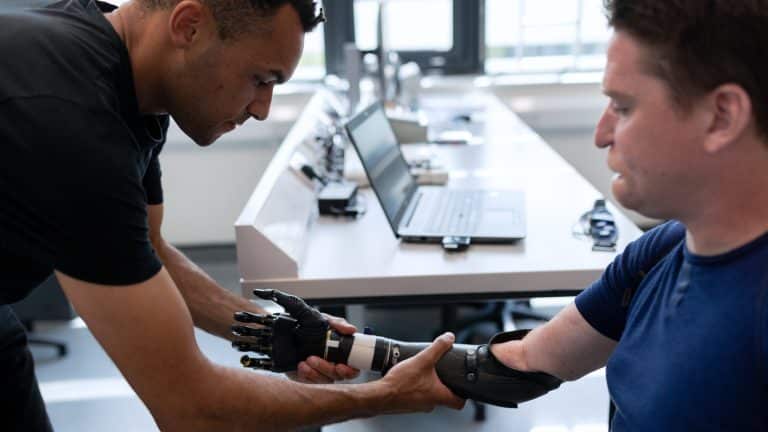


Life after limb loss shouldn’t intrude on your daily activities or thriving quality of life. About 6 weeks after surgery, you can begin to explore prosthetic leg/limb options. While prosthetics have three to five-year life spans, it’s important to know when to consider replacement.
In this blog, we will discuss:
- When should I replace my prosthetic leg?
- What is the lifespan of a prosthetic leg?
- How often will I need to be refitted for a prosthetic?
When should I replace my prosthetic leg?
Poorly fitted prosthetic limbs can cause skin irritations and discomfort in daily use. As soon as your prosthetic limb becomes loose and worn down, this is a sign that it’s time to consider a timely replacement.
Some signs to be on the lookout for include:
- If you notice your daily activities are becoming more challenging to complete with a prosthetic, this may be a sign of necessary replacement. Additionally, if you become more advanced in your routine and physical activity, it may become time to upgrade to a more advanced prosthetic that is right for you!
- If stability is compromised, and you begin to struggle with movement and balance.
- If the general fit and feel changes. This can be due to residual limb, weight loss or gain and can begin to irritate the surrounding skin.
Visit your prosthesis if it is no longer fitting properly so that you can participate in a more comfortable daily life with a more suitable limb.
What is the lifespan of a prosthetic?
A well-made prosthesis can last about three years. However, its lifespan heavily depends on daily wear and tear, patient activity level, and the materials used to make it.
Different types of prosthetics and their lifespans include:
- Lower limb prosthetics. Lower limb prosthetics are used for legs and feet. They have a lifespan between 3 and 5 years.
- Upper-limb prosthetics. Upper-limb prosthetics are used for arms and hands. Like lower-limb prosthetics, their lifespan ranges from 3 to 5 years, but advanced technology has increased this lifespan.
- Internal prosthetics. Internal prosthetic devices include pacemakers and joint replacements. There is no consistent lifespan for these prosthetics, but they are made to last from years to decades.
- Dental prosthetics. Dental prosthetics include dentures or other implants- which last up to a decade! These require frequent check ups and attentive care with your dental provider.
As the technology behind prosthetics advances, lifespans will continue to increase. Schedule regular checkups with your healthcare provider to ensure your prosthetics fit and function properly.
How often will I need to be refitted for a prosthetic?
Even as an adult, your body can change, resulting in a prosthetic no longer fitting properly. You should schedule regular visits with your rehabilitation team, including your physical and occupational therapists, to ensure your prosthetic keeps up with your lifestyle.
Prosthetics will last anywhere from three to five years due to general wear and tear, so getting refitted can be necessary after the prosthetic warps or cracks, physical body changes that change the fit of the limb, or daily activity that has advanced or regressed.
Custom Orthotics- Prosthetics That Last
At Pongratz, we pride ourselves on customizing prosthetics that promote functional recovery and a thriving quality of life. Call 602-222-3032 to learn more about our upper limb or lower limb prosthetics today.