
• Skip to main content
  • Our Services
    • Pressure Garments for Burns
    • Plagiocephaly Cranial Bands
    • Upper Extremity Prosthesis
    • Lower Limb Prosthesis
    • Mastectomy
    • Pediatrics
    • Custom Orthotics
  • Who We Are
    • Meet the Team
    • Residency Program
    • Community Activities
  • Patient Resources
    • Accepted Insurance
    • Request An Appointment
    • FAQ’s
    • Blog
    • New Technology
    • Diabetic Shoe Update
  • Locations
    • Avondale, AZ
    • Chandler, AZ
    • Casa Grande, AZ
    • Gilbert / Mesa, AZ
    • Glendale, AZ
    • Phoenix (West), AZ
    • Phoenix, AZ
    • Scottsdale, AZ
    • Tucson, AZ – Grant
    • Tucson, AZ – Cholla
Call (602) 222-3032
Call (602) 222-3032
  • Our Services
    • Pressure Garments for Burns
    • Plagiocephaly Cranial Bands
    • Upper Extremity Prosthesis
    • Lower Limb Prosthesis
    • Mastectomy
    • Pediatrics
    • Custom Orthotics
  • Who We Are
    • Meet the Team
    • Residency Program
    • Community Activities
  • Patient Resources
    • Accepted Insurance
    • Request An Appointment
    • FAQ’s
    • Blog
    • New Technology
    • Diabetic Shoe Update
  • Locations
    • Avondale, AZ
    • Chandler, AZ
    • Casa Grande, AZ
    • Gilbert / Mesa, AZ
    • Glendale, AZ
    • Phoenix (West), AZ
    • Phoenix, AZ
    • Scottsdale, AZ
    • Tucson, AZ – Grant
    • Tucson, AZ – Cholla
Get a Second Opinion
Call (602) 222-3032
Home > Patient Resources > Blog > What is Plagiocephaly? (Flat Head Syndrome)

What is Plagiocephaly? (Flat Head Syndrome)

April 22, 2024

Positional plagiocephaly, also known as flat head syndrome, affects around 50% of children.

This condition typically develops in the first four to 12 weeks of life but can also form before birth in the womb or canal.

  • What Is Flat Head Syndrome?
  • Does Flat Head Syndrome Go Away?
  • What Happens If Plagiocephaly Is Not Corrected?
  • Is Flat Head Syndrome Linked To Autism?
  • Does Plagiocephaly Need To Be Treated?

What Is Flat Head Syndrome?

Flat head syndrome is a condition that affects a baby’s head development. It manifests as a flat spot on the baby’s head, usually on the back of the head, due to spending too much time on their back. Left untreated, flat head syndrome can lead to permanent changes in the head shape. When a flat spot doesn’t improve by four months of age, helmet therapy will likely be required, which we will look at later in this blog.

Does Flat Head Syndrome Go Away?

A flat spot can certainly improve independently and not require additional support. That said, there are times when this isn’t the case, and the condition doesn’t get better.

When this happens, it’s important that the child receives proper treatment, usually through helmet therapy.

What Happens If Plagiocephaly Is Not Corrected?

When plagiocephaly is left untreated, it places the child at risk of developing neurological and psychological problems. In severe cases, pressure can be left on the brain, capable of triggering seizures. Likewise, untreated plagiocephaly can leave permanent head deformities that significantly alter a child’s appearance.

Is Flat Head Syndrome Linked To Autism?

Flathead syndrome cannot cause autism spectrum disorder. Autism is developed before birth and is linked to genetics rather than environmental factors. That said, some studies have shown children with flat head syndrome to be at higher risk of developmental delays.

Similarly, Macrocephaly, another condition that causes head deformities, has been associated with social difficulties and delayed onset of language.

Does Plagiocephaly Need To Be Treated?

Baby development can naturally fix plagiocephaly over time as they reposition themselves and relieve the pressure causing the flat spots. More severe cases of plagiocephaly may not get better on their own and require professional treatment. Cranial helmet therapy is a common and effective choice among the available treatments.

Cranial Helmet Therapy

Cranial helmet therapy uses a helmet, or cranial band, to treat abnormalities in the head’s development. The helmet is designed to comfortably fit over the child’s head while adding a small amount of pressure to properly shape the skull. Cranial brand therapy can usually begin as early as three months of age but may also be used by younger children ages five to six if they have unaddressed skull deformities.

Pongratz Cranial Bands For Pediatric Care

Pongratz is dedicated to the well-being and satisfaction of each and every one of our clients.

We specialize in Cranial Bands as well as other pediatric services, including:

  • Children’s Orthotics
  • Upper Extremity Prosthetics
  • Lower Limb Prosthetics

Contact us today to speak with one of our team members so we can learn more about your concerns for your child and how we can help.

We look forward to hearing from you.

Categories: Conditions

Related Posts

what are the most common causes of amputations
  • Conditions

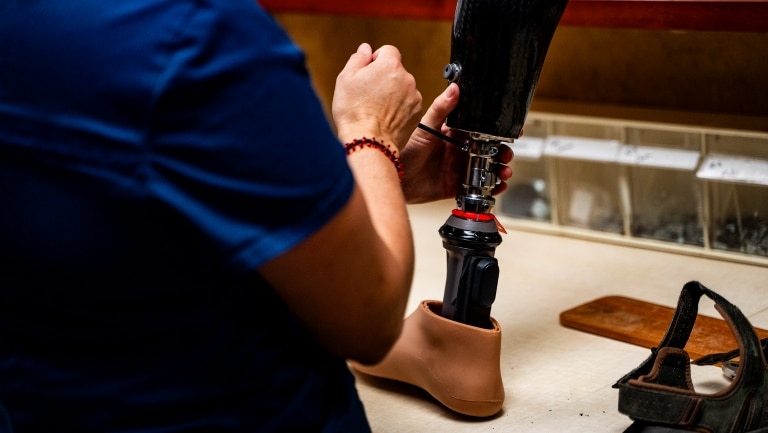
What are the Most Common Causes of Amputations?

Amputations can be life-changing events, but with the right support and technology, individuals can regain their independence and quality of life. Whether you’re an adult needing a prosthetic limb or...

Read moremore about What are the Most Common Causes of Amputations?
  • Conditions

Hammertoes

A hammertoe is a common foot deformity. In this condition, one or more of the smaller toes are bent in an abnormal position, usually affecting the second, third, or fourth...

Read moremore about Hammertoes
  • Conditions

High Arches (pes cavus)

Pes cavus is Latin for “hollow foot.” Commonly known as high arches, it is a condition where the arch of the foot is raised higher than normal. This condition affects...

Read moremore about High Arches (pes cavus)

Our Services

  • Pressure Garments for Burns
  • Plagiocephaly Cranial Bands
  • Upper Extremity Prosthesis
  • Lower Limb Prosthesis
  • Mastectomy
  • Pediatrics
  • Custom Orthotics

Our Locations

  • Avondale, AZ
  • Chandler, AZ
  • Casa Grande, AZ
  • Gilbert / Mesa, AZ
  • Glendale, AZ
  • Phoenix (West), AZ
  • Phoenix, AZ
  • Scottsdale, AZ
  • Tucson, AZ – Grant
  • Tucson, AZ – Cholla

Patient Resources

  • Accepted Insurance
  • Patient Forms
  • Request An Appointment
  • FAQ’s
  • New Technology
  • Diabetic Shoe Update
Contact Us
  • Facebook
  • Instagram
  • YouTube

Copyright © 2026 Pongratz Orthodontics & Prosthetics