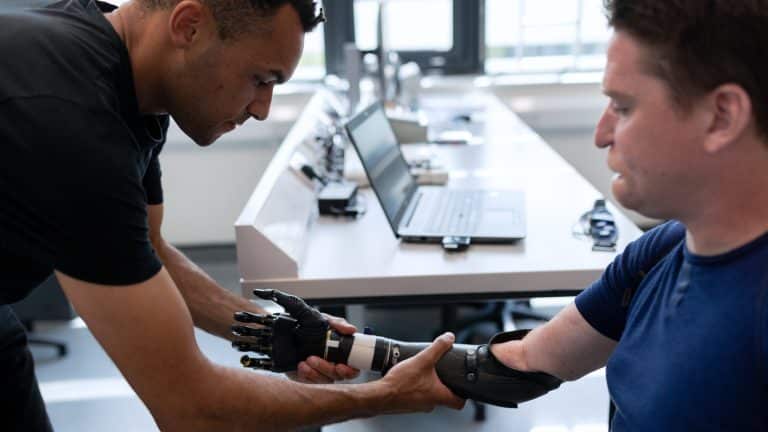


Most people with limb loss forget to ask important questions when choosing a prosthetic provider. Working with a prosthetist is a collaborative, long-term relationship, so it’s important to make sure you are choosing the right person for your unique needs.
Asking the right questions can help you understand your options, set realistic expectations, and achieve the best possible outcomes with your prosthetic.
Why Asking the Right Questions Matters in Prosthetic Care
Choosing your prosthetic care provider and your prosthetic devices is something you should actively participate in. You should be an active partner with your provider, as it directly impacts your mobility, comfort, and overall quality of life.
When you ask the right questions, you can set clear expectations and prevent future frustration, discomfort, or expensive adjustments. Prosthetic providers are used to answering frequently asked questions, and they are here to help you.
Questions About Your Prosthetist’s Credentials and Experience
It is incredibly important to choose a prosthetist with the right credentials and experience. Below are common questions you can ask when screening your prosthetist.
Are You Board-Certified in Prosthetics?
This matters immensely for your safety, as well as the quality of your prosthetic limb. Ask if your provider is certified by organizations such as the American Board for Certification in Orthotics, Prosthetics & Pedorthics, and the Board of Certification/Accreditation.
How Much Experience Do You Have With My Type of Amputation?
While a prosthetic provider may be certified, they may not have experience with your type of amputation. Make sure to ask about their particular experience and which types of amputations they have worked with in the past.
Types of amputation cases include:
- Traumatic vs. vascular amputations
- Upper limb prosthetics vs. lower limb prosthetics
- Pediatric, geriatric, or high-activity patients
Questions About Prosthetic Options and Technology
It’s important to know what prosthetic options are available to you, including the technology used. Here are some questions you can ask to understand the recommended selections.
What Type of Prosthesis Is Best for My Lifestyle and Goals?
Depending on your level of daily activity, work demands, hobbies, and long-term mobility goals, you will need specific devices to meet these needs. Take time to assess your daily life and goals.
Your prosthetic provider can help you find options that meet your needs and balance functionality, comfort, and durability.
What Prosthetic Components or Technology Do You Recommend and Why?
Certain providers will have access to advanced technology and may offer custom prosthetics designed on-site. Advanced technology is not always needed, so make sure your provider knows your personal needs.
Advanced components can include:
- Microprocessors
- Myoelectric sensors
- Sensory feedback
- Modular prosthetic limbs
Questions About Fit, Comfort, and Customization
Making sure your prosthetic limb is properly fitted should be a high priority. Not only will this affect comfort and mobility, but it can also reduce skin irritation or secondary injuries from falling.
How Will You Ensure Proper Fit and Alignment?
Does your intended provider take measurements of the residual limb and conduct a gait analysis? These evaluations are needed to determine the right fit.
Your provider may also offer custom sockets and individualized adjustments to further assist in a comfortable prosthetic fitting.
How Often Are Adjustments Expected?
This is important to know, as it will set up clear expectations for both parties. It’s normal for residual limb volume to change over time, so having open conversations about adjustments will create a helpful timeline for modifications.
Questions About the Fitting Process and Timeline
As you discuss adjustments after the initial fitting, you will also want to understand the typical fitting process and timeline. This will set up the correct expectations.
Here are some helpful questions to ask about fitting timelines for prosthetics and orthotics:
- How long does the entire prosthetic process usually take?
- How many fittings or test sockets should I expect?
- What happens if something doesn’t feel right after delivery?
Questions About Follow-Up Care and Long-Term Support
Your long-term care is just as important as your prosthetic fitting and creation. Without proper support, you may find yourself frustrated and uncomfortable. It’s important to ask these questions about long-term care.
What Does Ongoing Prosthetic Care Look Like?
Make sure to ask about routine check-ins and maintenance. You will want to use a provider that offers these, as they are crucial to ongoing functionality. Your provider should offer information about repairs, replacements, and upgrades over time.
You should also ask if your provider offers physical therapy as you adjust to your new device. This is a life-changing tool that can improve your overall quality of life.
Who Do I Contact If I Experience Pain or Skin Issues?
Sometimes, the initial fitting isn’t correct. When this happens, you can experience pain and skin irritation. You will want to know who to contact if this happens, and how to proceed.
Early intervention will help prevent breakdown or injury while making the proper adjustments to your device. Access to timely orthotic and prosthetic care is necessary to prevent frustration and discomfort.
Questions About Insurance, Costs, and Coverage
You should never select your prosthetic provider without asking about insurance, cost, and coverage. You will want to ask a few specific questions to ensure you understand the full extent of coverage. Answers may vary based on your insurance plan.
Make sure to ask:
- Will you help with insurance approvals and documentation?
- What costs should I expect beyond the prosthesis itself?
- How are repairs, replacements, or upgrades handled by insurance?
Questions About Collaboration and Rehabilitation
Your relationship with your prosthetic provider is ultimately a long-term, collaborative partnership. You will want to understand what your provider intends to offer and how they help patients during rehabilitation.
Ask questions such as:
- Do you coordinate with my physician or physical therapist?
- Will I receive training on how to use and care for my prosthesis?
- How do you help patients adapt emotionally and physically?
Questions to Ask Yourself After Meeting a Prosthetist
After you have met with a potential prosthetist, take a self-assessment on how you felt the meeting went.
Ask yourself:
- Did I feel listened to and respected?
- Were the explanations clear and easy to understand?
- Do I feel comfortable asking questions moving forward?
Patient-Centered Prosthetic Care with Pongratz
At Pongratz, we offer patient-centered care and collaborate with you to get the perfect prosthetic fit. If you are unsatisfied with your current provider, contact us today for a second opinion!
Prosthetic care should involve you, with clear communication and timely action. Let us provide you with the perfect prosthetic care today!