
Why Your Suspension System Matters
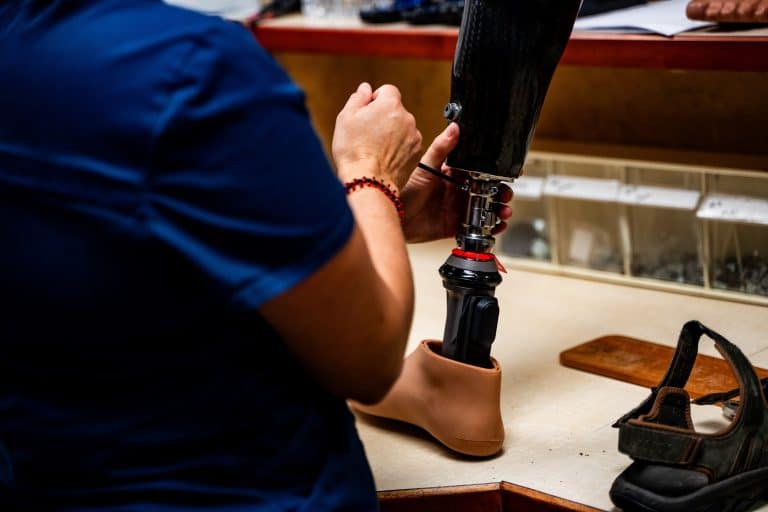
When designing a custom prosthesis, much of the attention naturally goes to the high-tech knees and carbon-fiber feet. However, the most critical component for your daily comfort and mobility is actually the suspension system. The suspension system is the invisible link that holds the prosthetic socket securely to your residual limb.
If your suspension is poor, you will experience “pistoning” (the limb sliding up and down inside the socket), which leads to friction, skin breakdown, and a loss of confidence in your balance. Conversely, a well-chosen suspension system makes the prosthesis feel like a true extension of your body.
Let’s break down the three most common types of suspension systems – pin-lock, suction, and elevated vacuum – so you can understand which one might be right for your lifestyle.
Summary
- Prosthetic suspension is the method used to keep your artificial limb securely attached to your residual limb.
- Pin-Lock systems use a physical pin and shuttle mechanism. They are secure and easy to put on, making them great for lower-activity users or those with limited hand dexterity.
- Suction systems use a one-way valve to create an airtight seal, offering a more natural feel and even pressure distribution.
- Elevated Vacuum systems use an active pump to continuously draw air out of the socket. This virtually eliminates pistoning, stabilizes limb volume, and promotes skin health, making it ideal for highly active users.
- The right choice depends on your activity level, residual limb shape, and personal preferences. Your prosthetist will guide you through the selection process.
What is a Prosthetic Suspension System?
Simply put, a suspension system is the technology that keeps your prosthesis from falling off. It controls the forces that act against your residual limb as you walk, specifically rotation and shear.
A good suspension system also improves proprioception – your body’s ability to sense where the limb is in space. When the connection between your limb and the socket is tight and secure, your brain receives better feedback, allowing you to walk more naturally and with less conscious effort.
Pin-Lock Suspension: Secure and Straightforward
The pin-lock suspension system is one of the most widely used and recognizable methods in prosthetics.
How It Works
You begin by rolling a silicone or gel liner over your residual limb. At the very bottom (distal end) of this liner is a ribbed metal pin. When you slide your limb into the hard prosthetic socket, this pin guides into a shuttle lock mechanism at the bottom of the socket, clicking securely into place. To remove the leg, you simply press a release button on the outside of the socket.
Pros:
- Audible Security: The clicking sound provides immediate reassurance that the leg is locked on.
- Ease of Use: It is very easy to don and doff (put on and take off), making it an excellent choice for individuals with limited hand strength or dexterity.
- Volume Forgiveness: It accommodates the use of prosthetic socks easily when your limb volume fluctuates.
Cons:
- Pistoning: Because the limb is only anchored at the very bottom by the pin, the soft tissue higher up on the limb can still stretch and pull, leading to slight up-and-down movement (pistoning) during the swing phase of walking.
- Distal Pull: Some users experience a pulling sensation at the bottom of the limb, which can be uncomfortable over long periods.
Suction Suspension: The Natural Feel
Suction suspension systems move away from mechanical locks and instead rely on atmospheric pressure to hold the leg in place.
How It Works
This system typically uses a specialized liner (often with sealing rings) or a suspension sleeve that rolls over the outside of the socket and onto your thigh. As you push your limb into the socket, a one-way expulsion valve at the bottom lets air out but prevents it from re-entering. This creates a passive negative pressure (suction) environment that holds the socket firmly to the limb.
Pros:
- Even Pressure: Unlike the pin-lock system, suction distributes the suspension forces evenly across the entire surface of the residual limb, eliminating the pulling sensation at the bottom.
- Better Proprioception: Because the connection is more intimate, users often report that the prosthesis feels lighter and more like a natural part of their body.
- Reduced Pistoning: Suction significantly reduces the amount of movement inside the socket compared to a pin system.
Cons:
- Donning Difficulty: It requires more effort and balance to put on correctly. Users often need to use a pull-sock, liquid powder, or alcohol spray to slide into the socket and create the seal.
- Volume Sensitivity: If your limb shrinks significantly during the day, the suction seal can break, causing the leg to feel loose.
Elevated Vacuum Suspension: Advanced Stability and Health
Elevated vacuum (or active vacuum) is the most advanced suspension technology currently available, taking the concept of suction to the next level.
How It Works
While passive suction only expels air when you step down, an elevated vacuum system uses an active mechanical or electronic pump to continuously draw air out of the socket. This creates a constant, highly elevated negative pressure environment between the liner and the socket wall.
Pros:
- Zero Pistoning: The continuous vacuum virtually eliminates all movement between the limb and the socket, providing unparalleled control and stability.
- Volume Management: The vacuum actually draws fluid into the residual limb, preventing the limb from shrinking throughout the day. This means your socket fits the same at 5:00 PM as it did at 8:00 AM.
- Skin Health: Clinical studies have shown that elevated vacuum systems improve blood circulation and oxygenation in the residual limb, promoting healthier skin and faster healing of abrasions.
Cons:
- Complexity and Maintenance: These systems have moving parts (pumps, hoses, and sometimes batteries) that require regular maintenance and care.
- Strict Fit Requirements: The socket must fit perfectly for the vacuum to work; it is not as forgiving of weight changes as a pin-lock system.
Comparing the Systems: Which is Right for You?
Choosing the right suspension system is a collaborative process between you and your prosthetist.
| Feature | Pin-Lock | Suction | Elevated Vacuum |
|---|---|---|---|
| Best For | Lower activity levels, new amputees, those with limited hand dexterity. | Moderate to high activity levels, users seeking a natural feel. | High activity levels, users with volume fluctuation issues or sensitive skin. |
| Ease of Donning | Very Easy | Moderate | Moderate to Difficult |
| Pistoning Control | Low | High | Excellent (Virtually Zero) |
| Volume Management | Managed with socks | Can lose seal if volume drops | Actively stabilizes limb volume |
Get the Right Fit at Pongratz
Understanding the differences between pin-lock, suction, and elevated vacuum suspension systems empowers you to make informed decisions about your prosthetic care. Whether you prioritize the ease of a pin-lock, the natural feel of suction, or the high-performance stability of an elevated vacuum, the right technology exists to support your goals.
If you are experiencing discomfort, pistoning, or simply want to explore if a different suspension system could improve your mobility, schedule a same-day appointment with the experts at Pongratz. We are here to help you find your perfect fit.